

Have you ever wondered why a ball rolls to a stop on its own, or why you feel pushed back into your seat when a car speeds up? These everyday moments are physics in action — and they all come down to two simple ideas: motion and force. In fact, you already experience motion and force every single day, whether you’re walking to the kitchen, riding a bike, or catching a ball. This guide breaks both concepts down in plain language, using real-life examples instead of confusing jargon.
The universe is constantly in motion. From tiny atoms and electrons to massive planets, stars, and galaxies, everything moves according to the laws of physics. This movement is called motion, while the interaction that causes an object to start moving, stop, speed up, slow down, or change direction is known as force. Together, motion and force shape every event in the universe, from the orbit of the Earth around the Sun to the collision of distant galaxies. The four fundamental forces of nature gravity, the electromagnetic force, the strong nuclear force, and the weak nuclear force govern all motion in the cosmos. Gravity keeps planets in orbit, holds galaxies together, and controls the life cycle of stars. The electromagnetic force allows atoms to form molecules, making matter and life possible. Meanwhile, the strong and weak nuclear forces operate inside atomic nuclei, driving nuclear reactions that power the Sun and other stars. On Earth, motion and force explain many everyday activities. A moving car accelerates because of the force produced by its engine, a football changes direction when kicked, and a rocket escapes Earth’s gravity by generating a powerful upward thrust. Even something as simple as walking involves several forces working together, including muscular force, friction, and gravity. These familiar examples show that the same physical laws governing the universe also control everyday life. The study of motion and force forms the foundation of classical mechanics, one of the oldest and most important branches of physics. Scientists such as Galileo Galilei, Johannes Kepler, and Sir Isaac Newton transformed our understanding of how objects move by discovering mathematical laws that accurately describe motion. Today, these principles are used in engineering, transportation, robotics, satellite technology, space exploration, and many other fields.
Understanding motion and force allows scientists to predict natural events, design advanced technologies, and explore the universe with remarkable precision. Whether studying the motion of microscopic particles or the paths of distant galaxies, these fundamental concepts reveal the hidden rules that govern the physical world. Learning about motion and force is therefore the first step toward understanding how the universe works and why everything around us is constantly changing.
Early Human Observations of Motion.
Long before written history, early humans relied on their observations of motion for survival. Hunters learned how to throw spears accurately by understanding how objects travel through the air. Farmers noticed that rolling heavy logs made transporting large stones easier than dragging them. Sailors observed that the wind could move boats across rivers and seas, while builders discovered that using levers allowed them to lift heavy objects with less effort .Although these people did not know scientific laws, they understood through experience that pushing, pulling, lifting, and throwing could change the motion of objects. These practical observations formed the earliest foundations of the study of force and motion.
Ancient Greek Ideas About Motion.
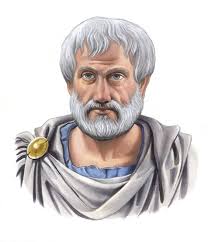
Around the 4th century BCE, the Greek philosopher Aristotle developed one of the first systematic explanations of motion.
Aristotle says that every object had a “natural place” in the universe. According to him:
- Heavy objects naturally moved downward toward the Earth.
- Light objects, such as smoke or fire, naturally moved upward.
- A moving object requires a continuous force to keep moving.
If the force stopped, the motion would stop immediately.
These ideas matched everyday experiences. For example, when a person stops pushing a cart, the cart eventually comes to rest. Because friction was not yet understood, Aristotle concluded that force was always necessary to maintain motion. Although many of his conclusions were incorrect, Aristotle’s ideas dominated scientific thinking for nearly 2,000 years because there was little experimental evidence to challenge them.
Medieval Scholars Improve the Theory.
During the Middle Ages, scholars in Europe and the Islamic world began questioning Aristotle’s explanation of motion. One important idea was the theory of impetus, which suggested that when an object is thrown, it carries an internal property that keeps it moving even after it leaves the thrower’s hand. This concept was not completely correct, but it was an important step toward understanding inertia. These scholars emphasized observation and logical reasoning, helping prepare the way for the scientific revolution.
Galileo Galilei: The Beginning of Modern Motion
The greatest breakthrough came in the late 16th and early 17th centuries with the work of Galileo Galilei, often called the Father of Modern Physics. One of his most famous investigations involved rolling balls down inclined planes. These experiments allowed him to measure motion more accurately.
Galileo discovered several revolutionary ideas:
In the absence of resistance, all objects fall with the same acceleration regardless of their mass .A moving object naturally continues moving unless something interferes with it. These discoveries challenged Aristotle’s belief that continuous force is needed to maintain motion. Galileo realized that friction, not the absence of force, is what usually causes moving objects to slow down and stop.
Isaac Newton Unifies Force and Motion
The most significant milestone in the history of force and motion came in 1687, when the English scientist Isaac Newton published his famous book, Philosopher Naturalis Principia Mathematica (Mathematical Principles of Natural Philosophy).In this work, Newton combined the discoveries of Galileo and other scientists into a complete mathematical theory. He introduced the Three Laws of Motion, which remain the foundation of classical mechanics.
Newton’s First Law (Law of Inertia)
Objects remain at rest or continue moving at constant velocity.
What Is Motion?
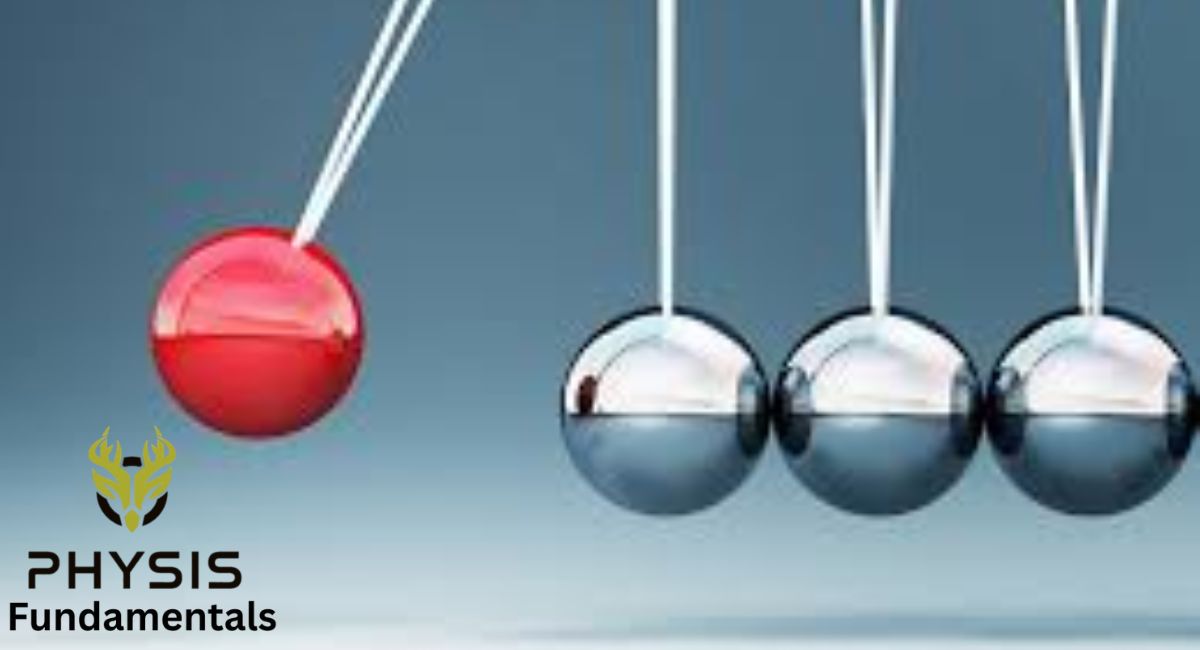
Motion means a change in position over time. If any object moves from one place to another, it’s in motion. If it stays exactly where it is, it’s at rest.
Examples
- A car driving down the street is in motion.
- A book sitting on your desk is at rest.
- Even you, sitting still right now, are technically moving because the Earth is spinning and orbiting the sun. Motion is often about perspective.
Daily life motions we can see.
- Straight-line motion _ like a train moving along a track.
- Circular motion – like a fan blade spinning or a car turning a corner.
- Back-and-forth motion – like a swing moving forward and back, or a pendulum in an old clock.
- Random motion – like a butterfly fluttering unpredictably through the air.
What Is Kinematics?
Kinematics is the branch of physics that studies the motion of objects without acting the forces causing that motion.
- How fast is it moving?
- In which direction is it moving?
- Is its speed increasing or decreasing?
- How long does the motion last?
- While walking
- While driving
- During sports
- Inside elevators
- On amusement park rides
- While cooking
- During rainfall
- Watching airplanes
- Playing with children
- Riding bicycles
Walking from Home to School.
- Your position changes continuously.
- You cover a certain distance.
- Your speed may vary.
- Sometimes you stop.
- Sometimes you walk faster.
Driving a Car.
- Accelerates when leaving a traffic signal.
- Maintains constant speed on open roads.
- Slows down near traffic.
- Stops at red lights.
- Turn around corners.
Riding a Bicycle.
- Faster on downhill roads
- Slower while climbing hills
- Constant speed on flat roads
- Sudden braking near obstacles
Running During Exercise.
- They start from rest.
- Accelerate rapidly.
- Reach maximum speed.
- Slow down after crossing the finish line.
Throwing a Ball.
- It rises upward.
- Slows down while climbing.
- Stops briefly at the highest point.
- Falls back to Earth.
- Speeds up as it descends.
Catching a Cricket Ball
- Initial velocity
- Changing position
- Travel time
- Predictable trajectory
What Is Dynamics?
Dynamics is the branch of mechanics that studies the relationship between forces and motion.
Such as.
- Why does a car start moving?
- Why does a football travel farther when kicked harder?
- Why do we feel forward when a bus suddenly stops?
- Why is lifting a heavy box more difficult than lifting a light one?
Why Dynamics Feels So Human.
- Our muscles apply forces.
- The ground pushes us upward forward when we walk.
- Gravity pulls us downward.
- Friction prevents us from slipping.
- Air resistance acts on us when we run or ride a bicycle.
Riding a Bicycle
When a cyclist pedals , the bicycle moves start slowly. Pedaling harder increases the force applied to the wheels, causing the bicycle to accelerate.
- Why does the bicycle speed up?
- Why climbing a hill requires more effort.
- Why a heavier rider may need more force to accelerate.
Kicking a Football.
A soft kick sends the ball a short distance. A powerful kick sends it much farther away
The force from the foot changes the ball’s velocity. The greater the force, the greater the acceleration of the ball.
Opening a Door.
- Start motion.
- Increase speed.
- Change the direction of movement.
Climbing Stairs.
When climbing stairs, your muscles exert an upward force against gravity.
- Carrying a backpack makes climbing harder.
- Faster climbing requires more effort.
- Tired muscles produce less force.
Why Do We Study Different Types of Motion?
- A train moves along straight tracks.
- A ceiling fan rotates around its center.
- A child swings back and forth.
- A football follows a curved path after being kicked.
Linear Motion (Straight-Line Motion).
Linear motion occurs when force acts on an object moving along a straight path.
Daily Life Examples.
- Walking along a straight road.
- A train running on a straight railway track.
- An elevator moving upward or downward.
- A person running in a straight race.
- A car traveling on a straight highway.
- Circular Motion.
Circular motion occurs when an object moves around a fixed center, following a circular path. Although the speed may remain constant, the direction changes continuously.
Daily Life Examples
- Ceiling fan blades.
- Clock hands.
- Ferris wheel.
- Bicycle wheels.
- Car steering wheel.
- Washing machine spin cycle.
- Earth rotating on its axis.
Characteristics.
- Motion follows a circular path.
- The object rotates around a fixed point.
- Direction changes continuously.
- A centripetal force is needed to bend the straight path into a circular path.
Rotational Motion.
Rotational motion occurs when an object spins around its own axis.
Unlike circular motion, where an object moves around an external center, rotational motion involves spinning about its own center.
Daily Life Examples
- Earth rotating once every 24 hours.
- A spinning top.
- Electric motor shafts.
- Blender blades.
- Drill machines.
- Wind turbines.
Characteristics
- The object spins around its own axis.
- Every particle on the object moves in a circular path.
- Angular speed describes the motion.
Oscillatory Motion
Oscillatory motion is the repeated movement of an object back and forth around a central position.
.Daily Life Examples
- Playground swings.
- Pendulum clocks.
- Guitar strings after being plucked.
- Sewing machine needle.
- Vibrating rulers.
- Rocking chairs.
Characteristics
- Motion repeats regularly.
- The object returns to its starting position.
- Movement occurs around an equilibrium point.
Vibrational Motion.
Vibrational motion is similar to oscillatory motion but usually involves very small and rapid back-and-forth movements.
Daily Life Examples
- Mobile phone vibration.
- Guitar strings.
- Loudspeaker membranes.
- Tuning forks.
- Washing machine vibrations.
Characteristics
- Very fast motion.
- Small amplitude.
- Repeated movement around a fixed position.
Projectile Motion.
Projectile motion occurs when an object is moved in two dimensions under constant acceleration due to gravity.
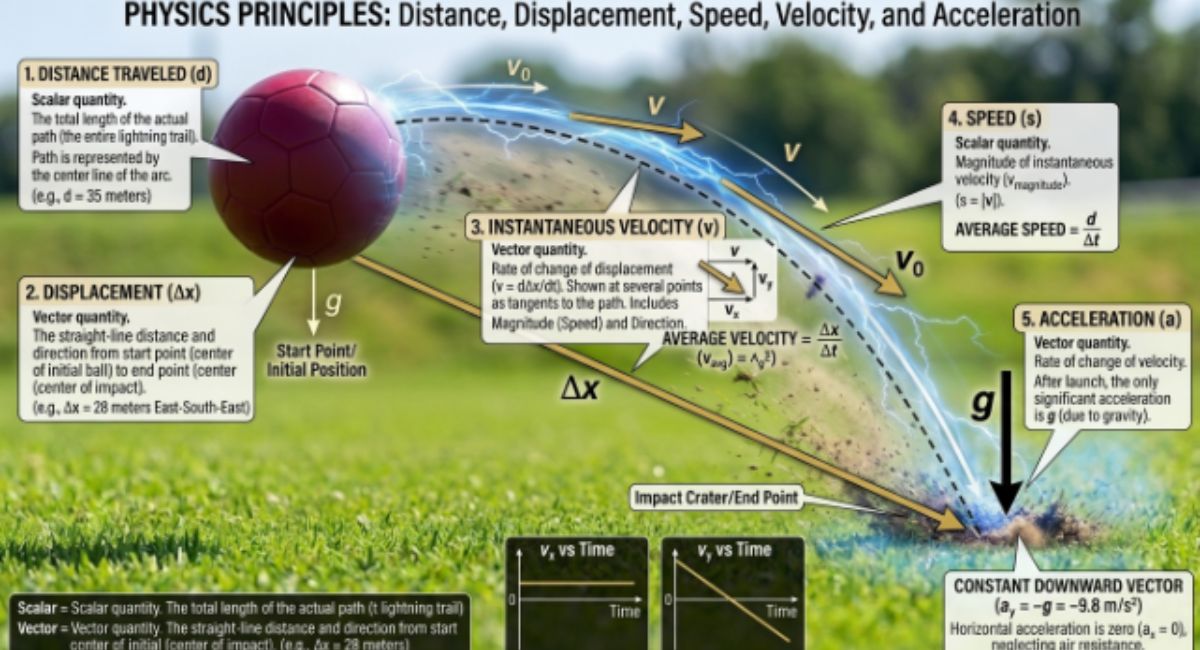
Its path becomes curved because gravity continuously pulls it downward.
Daily Life Examples
- Throwing a cricket ball.
- Kicking a football.
- Basketball shots.
- Water from a fountain.
- Fireworks.
properties.
- Motion combines horizontal and vertical movement.
- Gravity acts continuously.
- The path is curved.
Random Motion.
Random motion occurs when objects move without any fixed direction or predictable path.
Daily Life Examples
- Dust particles floating in sunlight.
- Mosquitoes flying.
- Butterflies moving from flower to flower.
- Smoke spreads through air.
- Gas molecules inside a room.
Watch dust particles near a window on a sunny day. They seem to move in every possible direction without following any pattern.
Characteristics
- No fixed path.
- Constantly changing direction.
- Difficult to predict.
Periodic Motion.
Periodic motion is any motion that repeats itself after equal intervals of time.

Daily Life Examples
- Earth’s revolution around the Sun.
- Pendulum clocks.
- Rotating fan blades.
- Moon orbiting Earth.
- Clock hands.
The changing seasons are caused by Earth’s periodic revolution around the Sun.
Characteristics
- Motion repeats regularly.
- Equal time intervals.
- Predictable behavior.
What Is Force?
If motion is about movement, then force is about what causes that movement — or stops it, or changes its direction.

In simple words, a force is a push or a pull. Every time you open a door, kick a football, or pedal a bicycle, you’re applying a force.
Forces can:
- Start motion – pushing a stalled car to get it moving.
- Stop motion – slamming the brakes to bring a bike to a halt.
- Change direction – hitting a tennis ball to send it the other way.
- Change speed – pressing the gas pedal to speed up, or letting go to slow down.
Everyday Examples of Force
- Pushing a shopping cart at the grocery store
- Gravity always attracting the phone toward the floor
- Wind pushing against a kite to keep it in the air
- Friction slowing down a skateboard as it rolls to a stop
Every one of these is a force at work — often more than one force acting at the same time.
How Motion and Force Are Connected.
Here’s the heart of it: things don’t move — or stop moving — on their own. Something has to cause it. That “something” is always a force.
This idea was famously explained by Sir Isaac Newton, whose laws of motion are still taught today because they describe the world so clearly:
- An object at rest will remain at rest, and an object in motion will always be in motion, unless a force acts on it. This is why a ball keeps rolling until friction or a wall stops it.
- The bigger the force, the bigger the change in motion — and heavier objects need more force to move them. It’s easier to push an empty box than a full box..
- Every action is an equal but opposite reaction. When you jump, you push down on the ground, and the ground pushes you back up. Nothing changes its motion without a reason — and that reason is always a force.
Types of Forces in Physics.
Forces are everywhere in your daily life. Every time you walk, open a door, throw a ball, or use a magnet, a force is involved. In physics, a force is any push or pull that can change the motion, direction, or shape of an object. Some forces require direct contact with an object, while others can act from a distance.
Contact Forces.
Contact forces act only when two objects physically touch each other. These are the forces you experience most often in everyday life.
Applied Force
An applied force is a force exerted directly by a person or another object.
Whenever you push a shopping cart, pull a suitcase, or kick a football, you are applying force. The object moves because your muscles transfer energy to it. The greater the applied force, the greater the object’s acceleration, provided its mass remains the same.
Real-life examples:
- Pushing a shopping cart in a supermarket.
- Pulling a drawer open.
- Kicking a soccer ball.
- Lifting a backpack from the floor.
Frictional Force
Friction is the force that opposes motion between two surfaces that are in contact. Without friction, objects would keep sliding, and walking or driving would become almost impossible.
Different surfaces create different amounts of friction. A rough road provides more grip than an icy surface.
Real-life examples:
- Walking without slipping because your shoes grip the ground.
- Car brakes slow a vehicle.
- Writing with a pencil on paper.
- Lighting a match by rubbing it against the matchbox.
Normal Force.
The normal force is the supporting force exerted by a surface on an object resting on it. It acts perpendicular to the surface.
When you place a book on a table, gravity pulls the book downward, while the table pushes upward with an equal normal force, keeping the book at rest.
Real-life examples:
- A book resting on a desk.
- Sitting on a chair.
- A parked car resting on the road.
- A person standing on the floor.
Tension Force
Tension is the force transmitted through a rope, cable, string, or chain when it is pulled tight. The force acts along the length of the rope.
Tension allows cranes to lift heavy loads and bridges to support traffic safely.
Real-life examples:
- Pulling a bucket from a well.
- Elevator cables supporting the elevator.
- Tug-of-war competitions.
- Suspension bridges holding vehicles.
Spring Force (Elastic Force)
A spring force occurs when a spring or elastic object is stretched or compressed. It always tries to return the object to its original shape.
This restoring force follows Hooke’s Law for small deformations.
Real-life examples:
- A spring inside a ballpoint pen.
- Car suspension systems.
- Trampolines.
- Bows used in archery.
Air Resistance (Drag Force).
Air resistance, also called drag, is the frictional force exerted by air on moving objects. It acts opposite to the direction of motion.
The faster an object moves, the greater the drag force becomes.
Real-life examples:
- A parachute slowing a skydiver.
- Cyclists wearing aerodynamic helmets.
- Birds adjusting their wings during flight.
- Cars designed with streamlined shapes.
Non-Contact Forces.
Non-contact forces act without physical contact. They can influence objects over a distance.
Gravitational Force
Gravity is always an attractive force between any two objects with mass. Earth’s gravity pulls everything toward its center, giving objects weight.
Gravity keeps the Moon in orbit around Earth and Earth in orbit around the Sun.
Real-life examples:
- An apple falling from a tree.
- Rain falling to the ground.
- Jumping and landing back on Earth.
- Ocean tides are influenced by the Moon’s gravity.
Magnetic Force
A magnetic force is produced by magnets or moving electric charges. It can either attract or repel certain materials, such as iron, nickel, and cobalt.
Real-life examples:
- Refrigerator magnets sticking to doors.
- Magnetic cranes lifting scrap metal.
- Electric motors in household appliances.
- Magnetic compasses pointing north.
Electrostatic Force.
The electrostatic force acts between electrically charged objects. Opposite charges attract, while like charges repel.
Static electricity is a common example of electrostatic force.
Real-life examples:
- A balloon sticking to a wall after rubbing it on hair.
- Small paper pieces attracted to a charged comb.
- Static shocks after walking on a carpet.
- Dust particles attracted to television or computer screens.
Strong Nuclear Force
The strong nuclear force is a fundamental force of nature. It holds protons and neutrons together inside the nucleus of an atom. Although protons have positive charges and naturally repel each other, the strong nuclear force is much stronger at very short distances.
Without this force, atoms could not exist, and neither could matter.
Real-life examples:
- Stability of atomic nuclei.
- Energy released in nuclear fusion inside the Sun.
- Nuclear power plants.
- Nuclear weapons.
Weak Nuclear Force
The weak nuclear force is responsible for certain types of radioactive decay. It changes one type of particle into another, making it essential for nuclear reactions and the formation of elements.
Although it acts over an extremely short distance, it plays a vital role in the universe.
Real-life examples:
- Radioactive decay.
- Carbon-14 dating used by archaeologists.
- Nuclear fusion in stars.
- Medical imaging using radioactive isotopes.
Distance and Displacement, Speed, Velocity, and Acceleration.
Motion is a part of everyday life. When you walk to school, ride a bicycle, drive a car, or throw a ball, you experience concepts such as distance, displacement, speed, velocity, and acceleration. These ideas help us understand how objects move and how quickly their motion changes.
Distance.
Distance is the actual length of the path covered by an object, regardless of direction. It is a scalar quantity, which means it has only magnitude and no direction.
-
Formula
Distance=Speed× Time
S=v× t
Unit.
-
SI Unit: meter (m)
-
Other units: kilometer (km), centimeter (cm)
Real-Life Example
Suppose you walk 200 meters to a shop and then return 200 meters back home.
- Total path traveled = 200 m + 200 m
- Distance = 400 meters
Distance only tells us how much ground was covered.
Types of Distance
- Linear Distance – Motion in a straight line.
- Curved Distance – Motion along a curved path.
- Circular Distance – Motion around a circular path.
What is Displacement?
Displacement is the shortest straight-line distance between the starting point and ending point, along with direction.
It tells us how far and in which direction an object has moved.
Formula.
Displacement=Final Position−Initial Position
Unit
- Meter (m)
Real-Life Example
Suppose your house is 400 meters east of the shop. Even if you walked 800 meters through different roads, your displacement is:
400m East
Difference Between Distance and Displacement
| Feature | Distance | Displacement |
|
Total path traveled | Shortest path between two points |
|
Scalar | Vector |
|
Not needed | Required |
|
Always positive | Can be positive, negative, or zero |
|
Walking around a park | Straight line from start to end |
What is Speed?
Speed is the distance traveled per unit time. It tells us how fast an object is moving.

Formula.
Speed=Distance/Time
SI Unit.
m/s
Other units:
- km/h
- cm/s
Types of Speed.
Uniform Speed
When a body covers equal distances in equal intervals of time.
Example:
A train moving at 60 km/h continuously.
Non-Uniform Speed
When an object does not cover equal distances in equal intervals of time.
Example:
A car moving through city traffic.
Average Speed
Total distance divided by total time.
Example
A person travels 120 km in 2 hours:
Speed=120/2=60 km/h
What is Velocity?
Velocity is the time rate of change of displacement.
Velocity tells us how fast and in which direction an object moves.
Formula
Velocity=Displacement/Time
SI Unit
m/s
Types of Velocity.
-
Uniform Velocity
When an object moves with constant speed in the same direction.
Example:
A car moving straight at 50 km/h.
-
Variable Velocity
When speed or direction changes.
Example:
A cyclist turning on roads.
-
Average Velocity
Total displacement divided by total time.
Average Velocity=Total Displacement/Total Time
* Instantaneous Velocity
The Velocity of an object at a particular instant time..
Example
A person walks 300 m east in 60 seconds.
Velocity=300/60=5m/s East
Difference Between Speed and Velocity
| Feature | Speed | Velocity |
| Quantity Type | Scalar | Vector |
|
Not required | Required |
|
Distance /Time | Displacement ÷ Time |
|
Always positive | Positive, negative, or zero |
|
60 km/h | 60 km/h north |
What is Acceleration?
Acceleration is the rate of change of velocity with time. It tells us how quickly an object speeds up, slows down, or changes direction.
Formula
a=v−u/t
Where:
- a = acceleration
- v = final velocity
- u = initial velocity
- t= time
SI Unit
m/s2
Types of Acceleration
-
Positive Acceleration
When speed increases.
Example:
A motorcycle increases speed from 20 km/h to 60 km/h.
-
Negative Acceleration (Deceleration)
When speed decreases.
Example:
A car slows down when brakes are applied.
-
Uniform Acceleration
The Velocity changes equally in equal intervals of time.
Example:
An object falling freely under gravity.
-
Non-Uniform Acceleration
The Velocity changes irregularly.
Example:
A car moving in busy traffic.
Example
A truck increases its velocity from 10 m/s to 30 m/s in 5 seconds.
a=30−10/5=4 m/s2
Feature |
Speed |
Velocity |
Acceleration |
| Meaning | How fast an object moves | Speed with direction | Change in velocity |
| Formula | Distance/ Time | Displacement / Time | Change in Velocity/ Time |
| Quantity | Scalar | Vector | Vector |
| Unit | m/s | m/s | m/s² |
Newton’s Three Laws of Motion.
Every movement around us follows certain natural rules. When a child kicks a football, a cyclist pedals faster, or a passenger suddenly moves forward when a car stops, the same scientific principles are at work. These principles are known as Newton’s Three Laws of Motion, introduced by Sir Isaac Newton in 1687. They explain why objects move, stop, speed up, or resist changes in motion. Even though these laws are part of physics, they are deeply connected to everyday human experiences. We observe them while walking, driving, playing sports, or simply pushing a shopping cart.
What Are Newton’s Laws of Motion?
Newton’s Laws of Motion are three fundamental rules that describe the relationship between forces and motion.
- The First Law explains why objects resist changes in motion.
- The Second Law explains how force changes an object’s motion.
- The Third Law explains why forces always come in pairs.
Newton’s Laws of Motion.
| Law | Statement | Physical Meaning | Key Concept |
| First Law (Law of Inertia) | An object remains at rest or in uniform motion unless acted on by a net external force | Objects do not change their velocity on their own — forces are required for any change in motion | Inertia — resistance to change in motion
Fnet=0 |
| Second Law | F = ma — net force equals mass times acceleration | Force determines how quickly velocity changes, not the velocity itself | Acceleration is proportional to force and inversely proportional to mass |
| Third Law | For every action force, there is an equal and opposite reaction force on a different object | Forces always come in pairs — you cannot push without being pushed back | Third-law pairs act on different objects and never cancel each other.
F=-F |
Newton’s First Law of Motion:
Newton’s First Law states:
An object at rest remains at rest, and an object in motion continues moving with the same speed and direction unless acted upon by an external force. its also called Law of Inertia
Formula Representation
- Fnet=0
When the net force is zero, the object’s motion does not change.
Daily Life Examples of Newton’s First Law
-
Passenger Moving Forward in a Car
When a moving car suddenly stops, your body keeps moving forward because your body wants to maintain its motion. Seat belts provide the external force needed to stop you safely.
-
A Book on a Table
A book remains at rest until someone pushes or lifts it.
-
A Football on the Ground
A football stays still until a player kicks it.
-
Cycling Without Pedaling
If you stop pedaling your bicycle, it continues moving for a short distance due to inertia before friction slows it down.
Inertia Explained Through Daily Life
Inertia is the natural tendency of an object to resist changes in its state of motion. Objects with larger mass have greater inertia. This is why moving a bicycle is easier than moving a car.
Types of Inertia.
Inertia of Rest.
An object at rest resists being moved.
Example: A heavy sofa remains where it is until someone pushes it.
Inertia of Motion.
A moving object resists stopping.
Example: A cyclist keeps moving forward even after stopping pedaling.
Inertia of Direction.
An object resists changes in direction.
Example: During a sharp turn in a car, passengers feel pushed sideways because their bodies want to continue moving in the original direction.
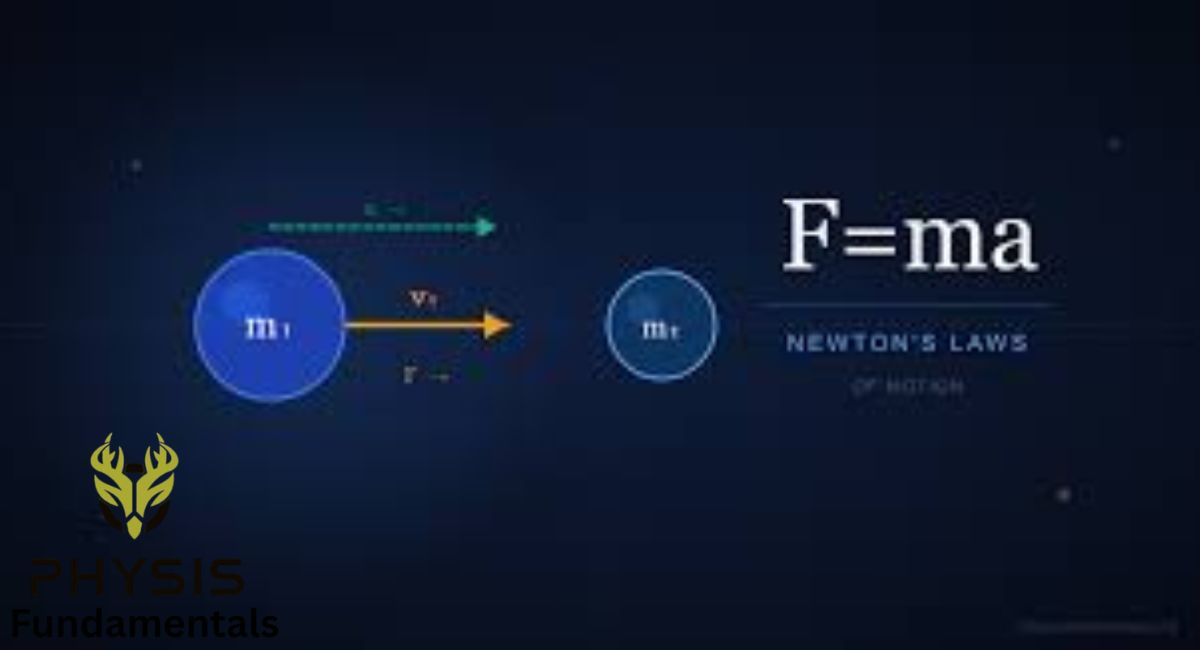
Newton’s Second Law of Motion: Force Causes Acceleration
Newton’s Second Law states:
The acceleration of an object depends directly on the net force applied and inversely on its mass.
- More force produces greater acceleration.
- Greater mass produces smaller acceleration.
Fnet=ma
- F = Force (Newtons, N)
- m = Mass (kilograms, kg)
- a = Acceleration (meters per second squared, m/s²)
Daily Life Examples of Newton’s Second Law
-
Kicking a Football
A stronger kick applies more force, causing the ball to accelerate faster.
-
Pushing a Loaded Cart
An empty cart accelerates easily, while a heavy cart requires more force to achieve the same acceleration.
-
Throwing a Cricket Ball
A light ball accelerates more easily than a heavier object.
-
Cycling Uphill
You must apply greater force to accelerate while riding uphill because gravity opposes your motion.
Newton’s Third Law of Motion.
Newton’s Third Law states:
Every action is always equal but is in the opposite direction.
Whenever one object acts a force on another object, also the second object acts an equal force in the opposite direction.
What Is Momentum?
Momentum tells us the quantity of motion possessed by a moving object. It depends on two things:
- The object’s mass
- Its velocity
An object with greater mass or higher speed has greater momentum, making it harder to stop or change its motion.
For example, pushing an empty shopping cart is easy. Push the same cart when it’s fully loaded with groceries, and you’ll notice it requires much more effort to stop. The loaded cart has greater momentum because its mass is larger.
Momentum Formula.
p=mv
Where:
- p = Momentum (kg· m/s)
- m = Mass (kg)
- v = Velocity (m/s)
SI Unit of Momentum
kg⋅ m/s=Ns
Momentum is a vector quantity,
Example
A football has a mass of 0.45 kg and moves at 20 m/s.
p=mv . p=0.45×20 =9 kg· m/s
The football carries 9 kg· m/s of momentum.
Factors Affecting Momentum.
Momentum increases when:
- Mass increases
- Velocity increases
If either mass or velocity doubles, momentum also doubles.
For example:
- A bicycle moving at 10 m/s has less momentum than a truck moving at the same speed.
- Two cars with the same mass will have different momentum if one is traveling faster.
What Is Impulse?
Impulse is the effect of a force acting over a period of time. Instead of focusing only on how large the force is, impulse also considers how long the force acts.
A small force acting for a long time can produce the same impulse as a large force acting for a very short time.
This explains why athletes bend their knees after landing from a jump—they increase the stopping time, reducing the force on their bodies.
Impulse Formula
J=FΔt I=F× t
Where:
- J = Impulse (N·s)
- F = Force (N)
- Δt = Time interval (s)
SI Unit
Newton-second =Ns
Impulse and momentum have equivalent SI units.
Relationship Between Momentum and Impulse.
The most important connection is:
J=Δp
or
Impulse=F×Δt=mvf−mvi
Impulse equals the change in momentum.
Whenever an object’s momentum changes, an impulse has acted on it.
Example 2: Impulse
A force of 60 N acts on a ball for 0.2 s.
J=60×0.2 J=12Ns
The impulse delivered is 12 N·s, which also means the ball’s momentum changed by 12 kg· m/s.
Why Momentum and Impulse Are Connected.
If you catch it with stiff hands, the stopping time is very short, so the force on your hands is large. If you move your hands backward while catching the ball, the stopping time becomes longer, reducing the force while producing the same change in momentum. The momentum changes by the same amount in both cases, but increasing the time reduces the impact force.
Real-Life Examples of Momentum and Impulse
-
Car Airbags
Airbags increase the time during which passengers stop moving.
The momentum changes to zero in both cases, but because the stopping time is longer, the force becomes much smaller, reducing injuries.
-
Seat Belts
Seat belts prevent passengers from continuing forward during sudden braking.
They increase stopping time and distribute force across the body.
-
Cricket and Baseball
Players move their hands backward after catching the ball.
This increases stopping time and reduces the impact force on their hands.
-
Boxing Gloves
Boxing gloves spread the impact over a slightly longer time and larger area.
This reduces injuries while still transferring enough impulse to move the opponent.
-
Gymnastics Mats
Soft landing mats compress during impact.
The compression increases stopping time, lowering the force on athletes.
-
Hammer and Nail
A hammer has large momentum because of its mass and speed.
When it strikes a nail, it delivers a large impulse, driving the nail into wood.
-
Rocket Launches
Rocket engines continuously expel gases downward.
The gases receive momentum in one direction, and the rocket gains momentum in the opposite direction, allowing it to rise.
-
Soccer Kick
A player’s foot applies force to the ball for a short time.
That impulse changes the ball’s momentum, sending it toward the goal.
Conservation of Momentum
In an isolated system where no external force acts,
Total Momentum Before Collision=Total Momentum After Collision\boxed{\text{Total Momentum Before Collision}=\text{Total Momentum After Collision}}Total Momentum Before Collision=Total Momentum After Collision
For two objects:
m1u1+m2u2=m1v1+m2v2
Momentum before collision =momentum after collision
This principle explains collisions between vehicles, billiard balls, and even galaxies.
Differences Between Momentum and Impulse
Although closely related, momentum and impulse describe different ideas.
Momentum measures how much motion an object has at any instant. Impulse measures how much that momentum changes because of a force acting over time.
Think of momentum as the object’s current motion, while impulse is the action that changes that motion.
Why Do We Use a Helmet?.
We use a helmet to protect the head from serious injuries during accidents. A helmet works by increasing the time of impact, which reduces the force acting on the head. This is an application of the impulse-momentum principle.:
Impulse=Force× Time.


One Comment