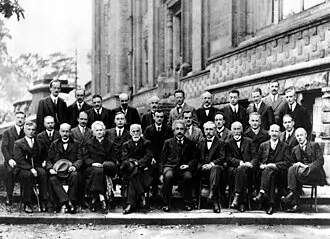
Physics helps us understand how the universe works, from the motion of a falling object to the behavior of atoms, light, stars, black holes, gravity, galaxies, planets, space, and time. Its history is really the story of how humans moved from wonder and speculation to careful observation, measurement, and mathematical explanation.
Before Physics: The Origins of Human Curiosity
Long before physics existed as a formal science, early humans asked questions that would eventually shape it:
- Why do objects fall toward Earth?
- How do planets move?
- What is matter made of?
- What is light?
- How does electricity work?
- What are space and time?
- How did the universe begin?
- Why does the sun rise and set?
- How do our eyes let us see the world around us?
- How does rain form, and what causes a rainbow?
- Why does the Moon appear to change shape?
- How does sound travel, and how are shadows formed?
These simple, instinctive questions were the seeds from which physics eventually grew.
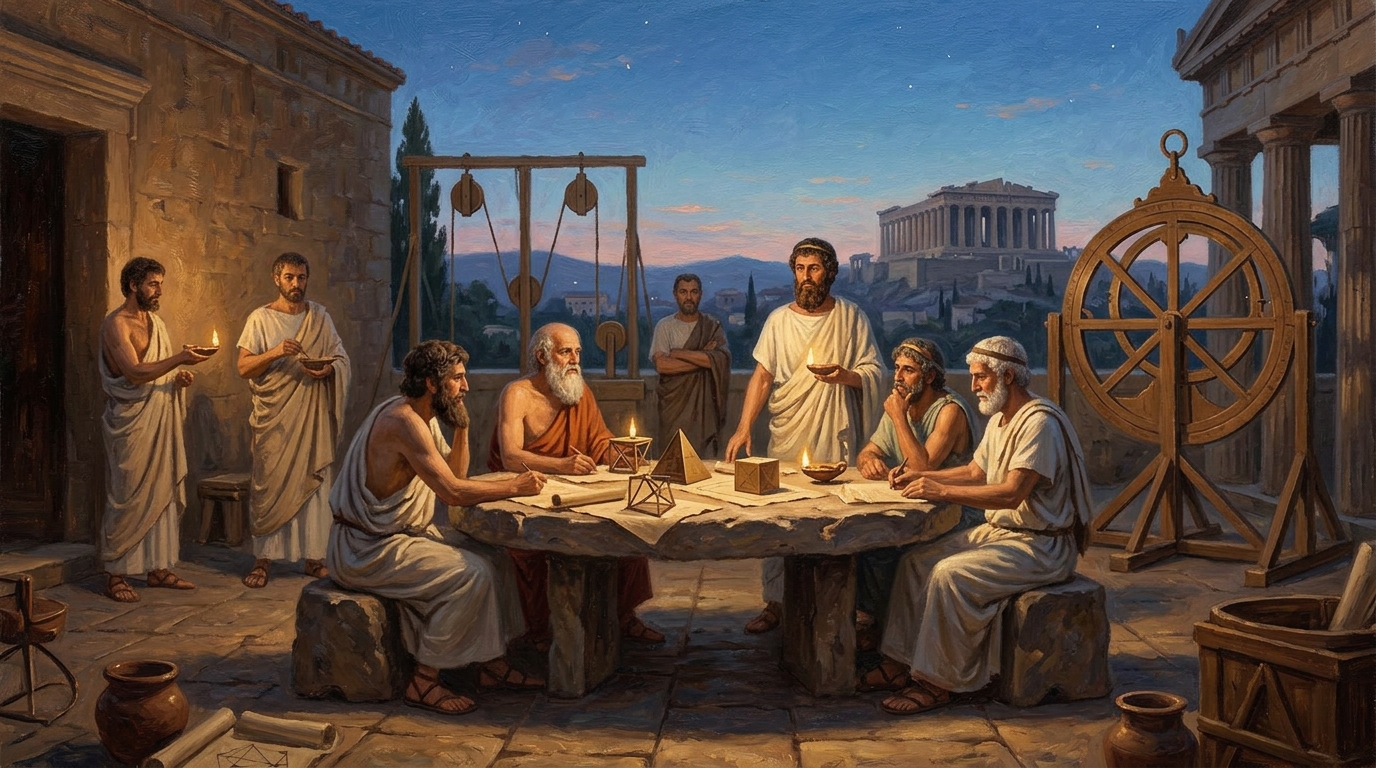
Physics in Ancient Civilizations.
Ancient Egypt.
The ancient Egyptians applied physical principles to architecture, engineering, and astronomy:

- Built the pyramids using practical knowledge of force, balance, and simple machines.
- Aligned monuments precisely with stars and cardinal directions.
- Developed tools to measure distances, angles, and land boundaries.
- Used levers and inclined planes to move massive stone blocks.
Their engineering achievements show a strong practical grasp of mechanics, even without formal mathematical physics.
Ancient Mesopotamia (Babylon).
The Babylonians were among the first civilizations to systematically study the sky:

- Recorded planetary and lunar movements over centuries.
- Developed mathematical methods to predict eclipses and planetary positions.
- Created numerical systems that improved astronomical calculations.
- Established one of the earliest traditions of scientific observation.
Ancient Greece.
Greek philosophers were the first to seek natural, rather than supernatural, explanations for physical events.

| Philosopher | Era | Key Contributions |
| Thales of Miletus | c. 600 BCE | Proposed natural causes for natural events; early work on geometry, astronomy, and static electricity (rubbed amber) |
| Pythagoras | 570–495 BCE | Connected mathematics with natural phenomena, numbers, geometry, and musical harmony |
| Democritus | 460–370 BCE | Introduced the idea of atoms as the fundamental building blocks of matter |
| Aristotle | 384–322 BCE | Developed early theories of motion, matter, space, time, and the structure of the universe |
| Archimedes | 287–212 BCE | Discovered the principles of buoyancy, levers, and hydrostatics — foundational to mechanics and fluid engineering |
Ancient India.
Indian scholars made significant contributions to early physics and astronomy, including:

- Calculating planetary motions with notable accuracy.
- Developing mathematical techniques that later supported physics.
- Exploring atomic concepts through philosophical schools such as vaisheshika .
- Producing astronomical texts describing eclipses, Earth’s rotation, and celestial mechanics.
Ancient China.
Chinese scholars advanced several practical fields related to physics:

- Early studies of magnetism that eventually led to the magnetic compass.
- Development of seismographs to detect earthquakes.
- Advances in optics, acoustics, and mechanical engineering.
- Inventions such as paper and gunpowder, rooted in careful observation of natural processes.
Astronomy and Early Ideas About the Universe.
Aristarchus of Samos (310–230 BCE).
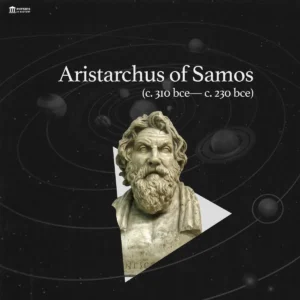
- The Sun is far larger and farther away than the Moon.
- Geometry can be used to study celestial objects.
- The Sun sits at the center of the solar system.
- Earth rotates on its axis once a day and orbits the Sun once a year.
Claudius Ptolemy (100–170 CE)
A Greco-Egyptian mathematician and astronomer working in Alexandria, developed the geocentric model described in his influential work, the Almagest.
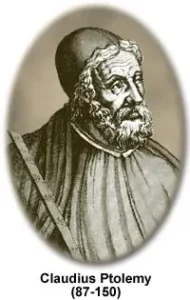
- Earth is stationary at the center of the universe.
- The Sun, Moon, planets, and stars revolve around Earth.
- Planets move along small circles (epicycles) riding on larger paths deferents which explained their apparent backward motion.
Ptolemy’s geocentric model dominated astronomical thinking for more than 1,400 years.
Contributions of Islamic Scientists to Physics.
During the Islamic Golden Age (8th–14th centuries CE), scholars built on Greek, Indian, and Persian knowledge to introduce experimental methods and mathematical rigor that shaped modern physics.
- Ibn al-Haytham (c. 965–1040 CE) — Known in Europe as Alhazen and often called the Father of Modern Optics, he made major advances in the study of light, vision, reflection, refraction, the camera obscura, and experimental methodology.
- Al-Bruni (973–1048 CE) — Measured Earth’s radius with impressive accuracy, studied gravity and mineral density, and improved methods of astronomical observation.
- Al-Jazari (1136–1206 CE) — Designed water-raising machines, hydraulic systems, and automated devices; authored The Book of Knowledge of Ingenious Mechanical Devices.
- Omar Khayyam (1048–1131 CE) — Reformed the Persian calendar, advanced algebra and geometry, and contributed to astronomical observation.
The Birth of Modern Physics.
The Scientific Revolution, spanning the 16th and 17th centuries, marked a turning point in the history of physics. Rather than relying on ancient authorities, scientists began investigating nature through observation, controlled experiments, mathematics, and precise measurement — establishing the scientific method still used today.
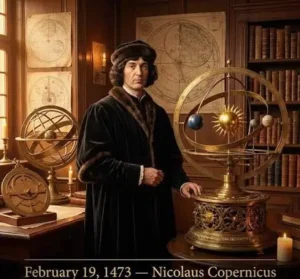
Nicolaus Copernicus (1473–1543).
 .
.
published his heliocentric model in 1543
- The Sun sits near the center of the planetary system.
- Earth rotates on its axis and revolves around the Sun.
Galileo Galilei (1564–1642).
 Often called the Father of Modern Physics and the Father of Experimental Science, transformed the study of motion and astronomy through observation and experimentation. Using a telescope, he discovered mountains on the Moon, sunspots, the moons of Jupiter, and the phases of Venus. He also studied falling bodies, acceleration, projectile motion, pendulum motion, and inertia.
Johannes Kepler (1571–1630).
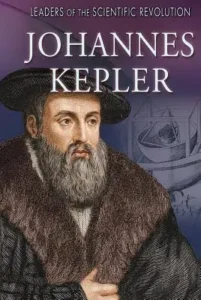
Work on building on Copernicus’s model and Tyco Brahe’s observational data, formulated the three laws of planetary motion:
- First Law: Planets move in elliptical orbits around the Sun.
- Second Law: A planet moves faster when closer to the Sun and slower when farther away.
- Third Law: A planet’s orbital period is mathematically related to its distance from the Sun.
Isaac Newton (1643–1727) .
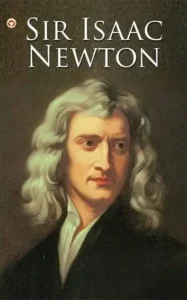
Birth of Classical Physics. Newton united the motion of objects on Earth with the motion of celestial bodies, publishing his findings in the Philosophic Naturalis Principia Mathematica (the Principia).
- First Law: An object remains at rest or in uniform motion unless acted on by an external force.
- Second Law: Force equals mass times acceleration (F = ma).
- Third Law: For every action, there is an equal and opposite reaction.
- Universal Gravitation: Every object with mass attracts every other object with a gravitational force.
The Development of Optics and Light.
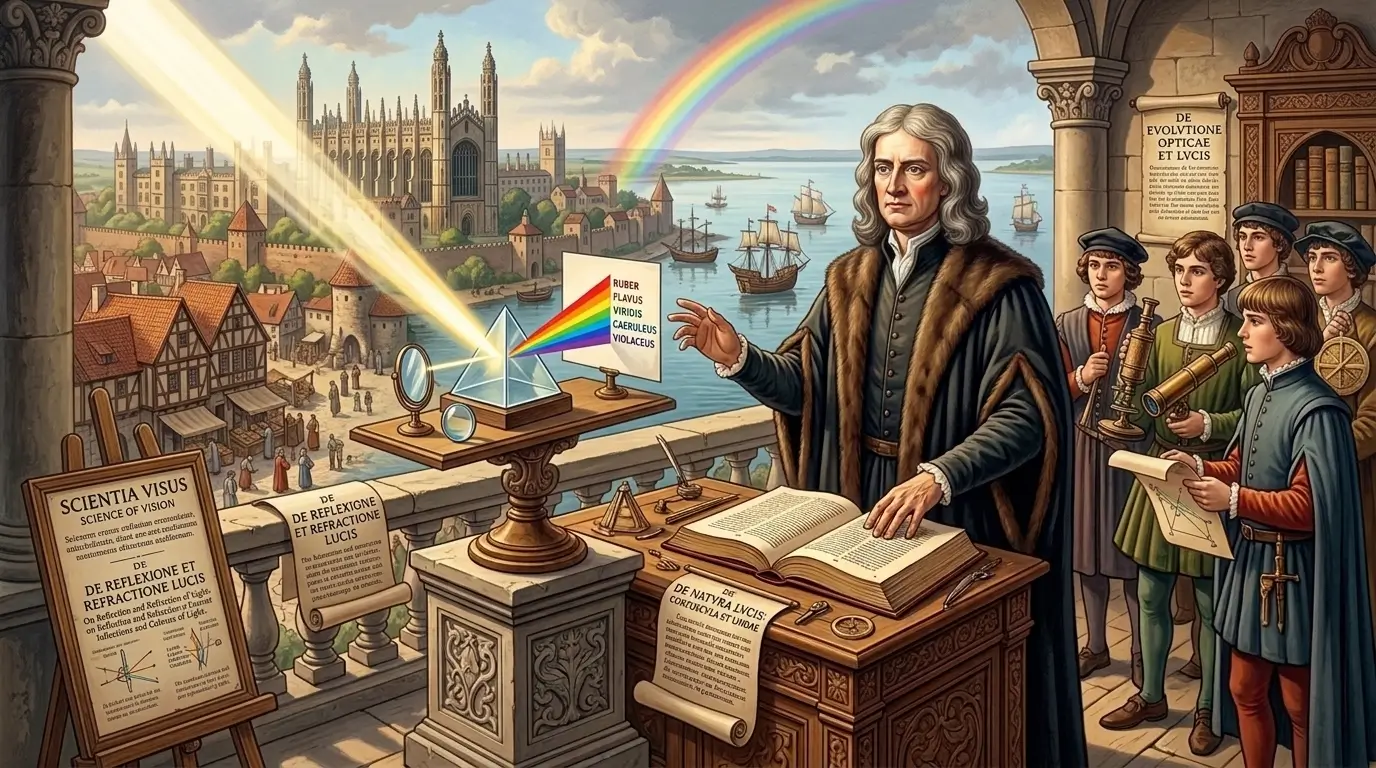
Optics — the study of light’s behavior and properties — has played a central role in the development of physics. Over centuries, scientists explored how light travels, reflects, refracts, and interacts with matter. Newton showed that white light contains many colors, which a prism separates due to their differing behavior in the material. These discoveries laid groundwork for electromagnetism, quantum physics, relativity, and modern optical technology.
Expanding Classical Physics.
The 18th century saw classical physics grow substantially. Building on Newton’s work, scientists extended the study of mechanics, fluid dynamics, electricity, heat, and mathematics — refining and applying Newtonian theory to a broader range of phenomena, including motion, forces, orbits, fluids, and vibration. This groundwork prepared the way for the breakthroughs of the 19th century.
Electricity and Magnetism.
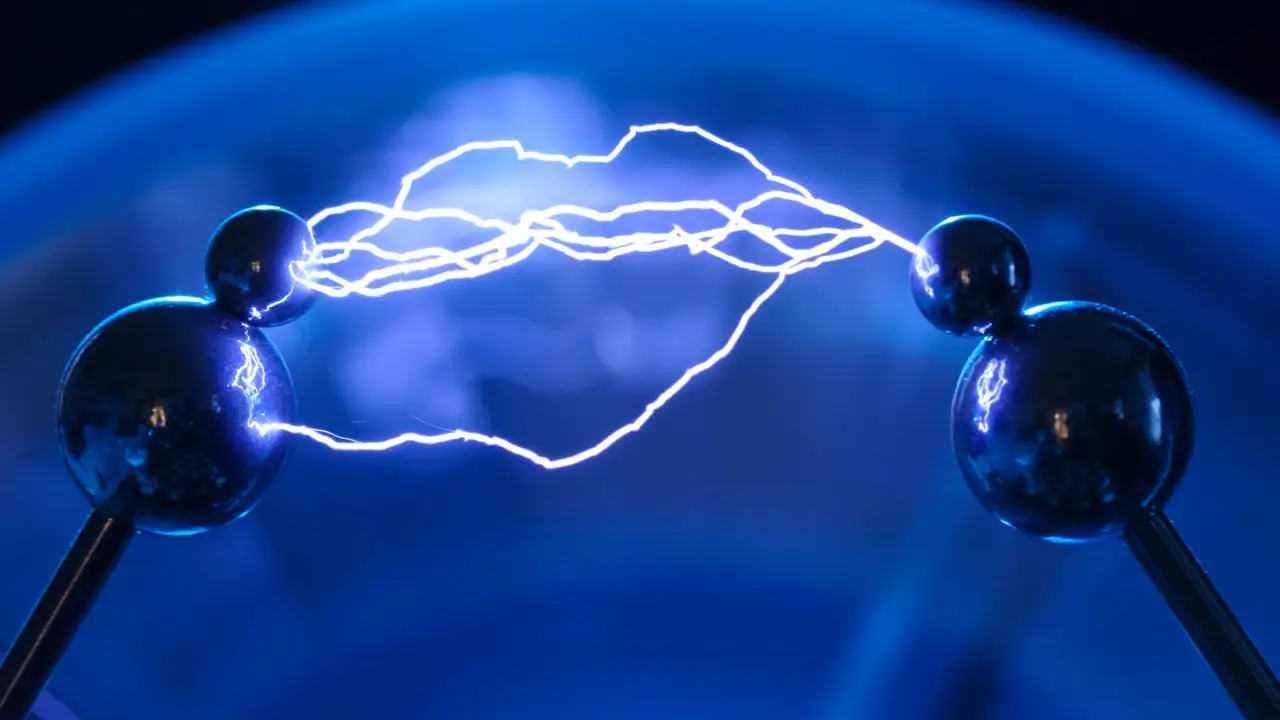
Electricity and magnetism were initially studied separately, but 19th-century scientists discovered they are deeply connected — giving rise to electromagnetism, one of the four fundamental forces of nature and a cornerstone of modern physics and technology.
- Benjamin Franklin (1706–1790) — Advanced the understanding of electric charge, positive and negative electricity, and lightning.
- Alessandro Volta (1745–1827) — Invented the voltaic pile, the world’s first practical battery, providing the first continuous source of electric current.
- Hans Christian Oersted (1777–1851) — Demonstrated in 1820 that an electric current creates a magnetic field, founding the science of electromagnetism.
- Michael Faraday (1791–1867) — Discovered electromagnetic induction, laying the foundation for electric generators, transformers, motors, and modern power systems.
- James Clerk Maxwell — Unified electricity, magnetism, and light into a single theory of electromagnetism, showing that light itself is an electromagnetic wave. His work underpins radio, television, radar, and wireless communication.
Thermodynamics.

Thermodynamics, the study of heat, work, temperature, and energy transformation, developed rapidly during the 19th century through the work of Saddi Carnot, James Prescott Joule, Rudolf Claudius, William Thomson (Lord Kelvin), and Ludwig Boltzmann.
- Zeroth Law: If system A is in thermal equilibrium with B, and B with C, then A is in thermal equilibrium with C.
- First Law (Conservation of Energy): Energy cannot be created or destroyed, only converted. ΔU = Q − W (where ΔU is the change in internal energy, Q is heat added, and W is work done by the system).
- Second Law: Heat flows naturally from hot to cold, and the entropy of an isolated system never decreases (ΔS ≥ 0).
- Third Law: As temperature approaches absolute zero, the entropy of a perfect crystal approaches zero.
The Discovery of Electron.
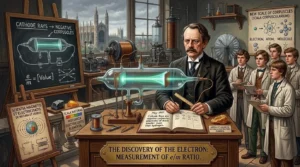
J.J Thomson — 1897. Before the late 19th century, atoms were believed to be the smallest, indivisible units of matter. In 1897, Thomson showed that atoms contain tiny, negatively charged particles, proving atoms are divisible and opening the door to atomic physics, nuclear physics, quantum mechanics, and particle physics.
The Discovery of X-Rays.
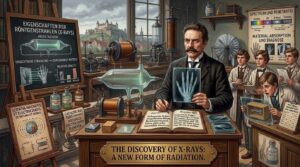
Wilhelm Conrad Rontgen — 1895. Rontgen discovered a previously unknown form of electromagnetic radiation capable of passing through materials opaque to visible light. This breakthrough transformed medicine, physics, biology, and medical diagnosis.
Radioactivity and the Structure of the Atom.
Henri Becquerel — 1896.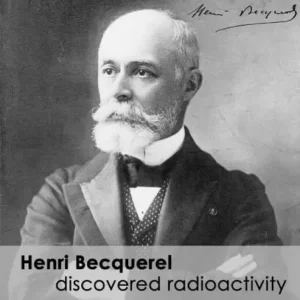
Becquerel discovered that certain elements spontaneously emit invisible radiation, revealing that atoms have internal structure and can transform into other elements — paving the way for nuclear physics and modern medical imaging.
Marie Curie (1867–1934) and Pierre Curie (1859–1906)
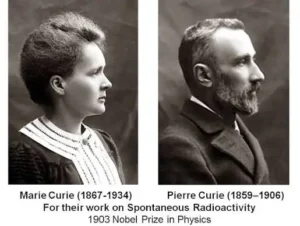
Discovered the radioactive elements polonium and radium, laying the foundation for nuclear science and radiation therapy. Marie Curie, born Maria Skłodowska in Warsaw, moved to Paris in 1891 to study at the Sorbonne after being barred from universities in Russian-controlled Poland. Pierre Curie, born in Paris, had already made notable contributions to crystallography, magnetism, and piezoelectricity before they met.
Ernest Rutherford — 1911
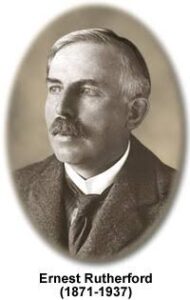
Through his gold foil experiment, Rutherford showed that an atom is mostly empty space with a tiny, dense, positively charged nucleus containing most of its mass — replacing Thomson’s “plum pudding” model and establishing modern atomic physics.
A physicist and chemist born in New Zealand who later worked in Britain, best known as the pioneer of nuclear physics He revolutionized our understanding of the atom, discovered radioactive half-lives, and became the first person to deliberately split an atom.
Quantum Theory Begins.
Max Planck (1858–1947) — Father of Quantum Theory.
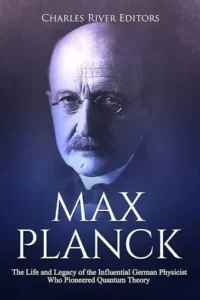
In 1900, Planck proposed that energy is emitted and absorbed in discrete packets called quanta, fundamentally changing scientific understanding of matter, light, and energy. His work influenced Einstein, Bohr, Heisenberg, and Schrödinger.
- The Constant That Changed Physics: In 1900, he uncovered a fundamental constant of nature — now called Planck’s constant (h) — laying the foundation for quantum theory.
- Breaking Energy into Packets: He showed that energy isn’t released in a smooth, continuous stream, but rather in tiny, discrete bursts known as quanta.
- Solving the Blackbody Puzzle: His radiation law fixed major flaws in classical physics, most notably putting an end to the so-called “ultraviolet catastrophe.”
- Backing Einstein Early On: He was among the first major physicists to support and help validate Einstein’s special theory of relativity.
Albert Einstein and the Theory of Relativity.
Albert Einstein (1879–1955) — Father of Modern Physics.
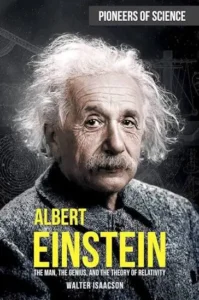
Einstein’s theories of special relativity, general relativity, and the photoelectric effect reshaped our understanding of space, time, energy, gravity, and light.
Special Relativity (1905): Measurements of space and time depend on the observer’s motion; the laws of physics are the same in all inertial frames; the speed of light in a vacuum is constant for all observers. This led to predictions including time dilation, length contraction, relativity of simultaneity, and mass–energy equivalence.
Photoelectric Effect (1905): Electrons are emitted from a metal surface when struck by light of sufficient frequency, showing that light has both wave-like and particle-like properties. This work earned Einstein the 1921 Nobel Prize in Physics.
General Relativity (1915): Einstein showed that gravity is not a conventional force but the result of mass and energy curving spacetime. This replaced Newton’s model of gravity for extreme conditions and underlies our understanding of black holes, gravitational waves, cosmic expansion, and GPS.
Quantum Mechanics.
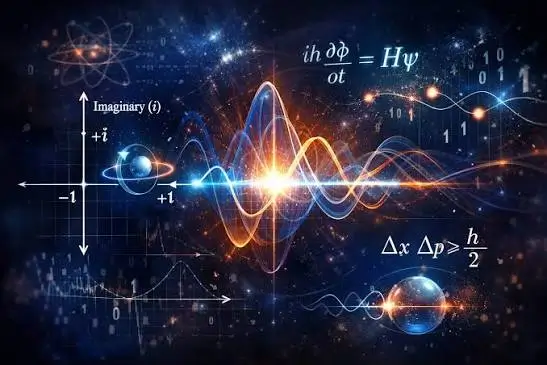
Quantum mechanics studies matter and energy at the atomic and subatomic scale, where classical physics no longer accurately predicts behavior. Developed in the early 20th century, it revealed that nature behaves probabilistically rather than deterministically at very small scales.
- Niels Bohr — Developed an atomic model with electrons occupying specific energy levels.
- Louis de Broglie — Proposed that particles like electrons can behave as waves.
- Werner Heisenberg — Developed matrix mechanics and the uncertainty principle.
- Erwin Schrödinger — Developed wave mechanics and the Schrödinger equation.
Other key contributors included Wolfgang Pauli and Paul Dirac. Together, their work explained blackbody radiation, the photoelectric effect, atomic spectra, and the stability of atoms — showing that particles can behave like waves, energy can be quantized, and measurement itself plays a fundamental role.
Nuclear Physics and the Atomic Age.
The discovery of the atomic nucleus led to rapid progress in nuclear physics, including the discovery of the neutron and an understanding of nuclear reactions, fission, and fusion.
James Chadwick (1891–1974). discovered the neutron in 1932, completing the picture of the atom by showing its nucleus contains both protons and neutrons. This discovery explained isotopes and enabled nuclear energy, nuclear medicine, and nuclear reactors — with later applications in cancer treatment, medical imaging, and astrophysics.
The particle physics.
Particle physics studies the fundamental particles of matter and the forces governing their interactions, asking what matter is ultimately made of. Scientists discovered that protons and neutrons are themselves made of smaller particles called quarks. Together with electrons, neutrinos, muons, and other particles, these form the Standard Model of Particle Physics, which describes three fundamental interactions: electromagnetic, weak nuclear, and strong nuclear.
The Higgs Boson.
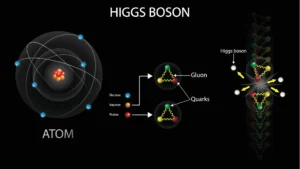
In 1964, Peter Higgs and François Englert proposed the theory behind the Higgs mechanism, predicting a new particle: the Higgs boson. This particle is linked to the Higgs field, which gives other particles mass. In 2012, experiments at CERN’s Large Hadron Collider (LHC) confirmed the Higgs boson’s existence, nearly fifty years after it was first predicted.
CERN.
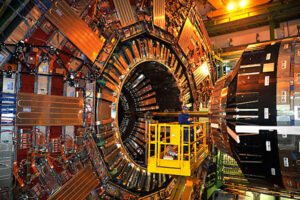
CERN — the European Organization for Nuclear Research — runs the world’s largest and most advanced particle physics laboratory. Situated along the France–Switzerland border just outside Geneva, it stands as one of the leading centers for scientific discovery on a global scale. At its core, CERN exists to answer fundamental questions about the universe: what it’s made of and how it functions, by probing the smallest building blocks of matter.
Cosmology and the Expanding Universe.
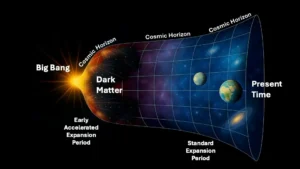
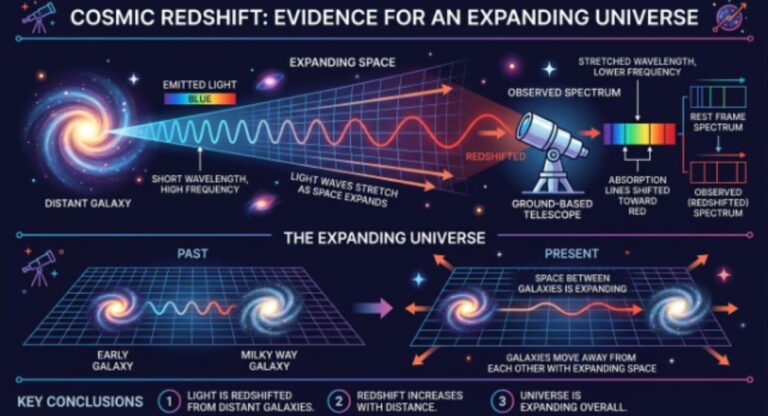
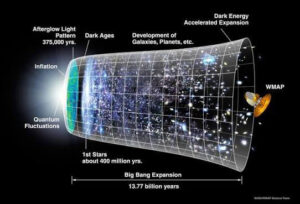
Cosmology studies the origin, evolution, structure, and fate of the universe, combining general relativity, quantum physics, particle physics, and astronomical observation. One of its greatest discoveries is that the universe is expanding, which led to the Big Bang Theory the leading model describing the universe’s origin.
Key topics in modern cosmology include the cosmic microwave background, black holes, dark matter, dark energy, and gravitational waves. Cosmologists continue to explore how the universe began, its age, its composition, whether it will keep expanding, and whether other worlds exist beyond our solar system.
Gravitational Waves.
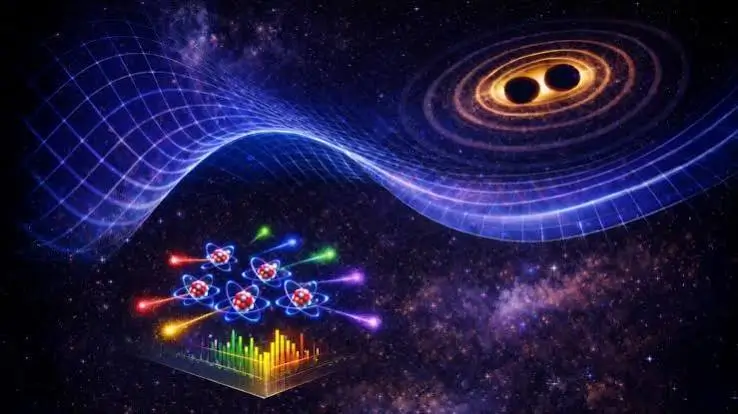
Predicted by Albert Einstein in 1916,
Gravitational waves are ripples in spacetime produced when massive objects accelerate — such as colliding black holes or neutron stars. They travel at the speed of light.
LIGO — First Direct Detection, 2015.
The Laser Interferometer Gravitational-Wave Observatory made the first direct detection of gravitational waves on September 14, 2015, confirming Einstein’s century-old prediction and opening the field of gravitational-wave astronomy.
Physics in the 21st Century.
Physics continues to evolve through active research in:
- Quantum Computing — using quantum physics to build new kinds of computers.
- Nanotechnology — studying and controlling matter at extremely small scales.
- Quantum Information — applying quantum principles to how information is processed.
- Dark Matter — investigating the invisible matter influencing galactic motion.
- Dark Energy — studying the force behind the universe’s accelerating expansion.
- Fusion Energy — developing controlled nuclear fusion as a future energy source.
- Quantum Gravity — seeking a theory that unifies quantum mechanics and general relativity.
Complete Timeline of the History of Physics
Date |
Scientist/Event |
Major Contribution |
| c. 600 BCE | Thales | Natural explanations of phenomena |
| 460–370 BCE | Democritus | Early atomic theory |
| 384–322 BCE | Aristotle | Early systematic study of motion and nature |
| 310–230 BCE | Aristarchus | Early heliocentric model |
| 287–212 BCE | Archimedes | Buoyancy and mechanics |
| 1543 | Copernicus | Heliocentric model published |
| 1609–1619 | Kepler | Laws of planetary motion |
| Early 1600s | Galileo | Experimental study of motion and astronomy |
| 1687 | Newton | Laws of motion and universal gravitation |
| 1800 | Volta | First practical battery |
| 1820 | Orsted | Link between electricity and magnetism |
| 1831 | Faraday | Electromagnetic induction |
| 1860s | Maxwell | Electromagnetic theory |
| 1895 | Rontgen | X-rays |
| 1896 | Becquerel | Radioactivity |
| 1897 | J. J. Thomson | Electron |
| 1900 | Max Planck | Quantum theory begins |
| 1905 | Einstein | Special relativity and photoelectric effect |
| 1911 | Rutherford | Nuclear model of the atom |
| 1915 | Einstein | General relativity |
| 1920s | Bohr, Heisenberg, Schrödinger | Quantum mechanics |
| 1932 | Chadwick | Neutron |
| 1964 | Higgs and Englert | Higgs mechanism |
| 2012 | CERN | Higgs boson confirmed |
| 2015 | LIGO | First direct detection of gravitational waves |
FAQs About History of Physics
What is the history of physics?
The history of physics traces how our understanding of matter, energy, motion, space, and time has evolved — from ancient civilizations to modern scientific discovery.
When did the study of physics begin?
Physics began thousands of years ago with observations made by civilizations such as Egypt, Mesopotamia, India, China, and Greece, who studied astronomy, mechanics, and natural phenomena.
Who is considered the father of modern physics?
Galileo Galilei is often called the Father of Modern Physics for introducing systematic experimentation and mathematical analysis. Newton and Einstein are also regarded as key founders of modern physics.
What was the Scientific Revolution in physics?
The Scientific Revolution (16th–17th centuries) was a period in which Copernicus, Galileo, Kepler, and Newton transformed our understanding of the universe through observation, experimentation, and mathematical law.
What are the most important discoveries in the history of physics?
Key discoveries include Newton’s laws of motion, universal gravitation, electromagnetism, the electron, radioactivity, quantum mechanics, relativity, the neutron, the Higgs boson, and gravitational waves.
Why is Isaac Newton important in the history of physics?
Newton formulated the three laws of motion and universal gravitation, founding classical mechanics and explaining both earthly and planetary motion within a single framework.
How did Albert Einstein change physics?
Einstein developed special and general relativity and explained the photoelectric effect, work that helped establish quantum theory and earned him the 1921 Nobel Prize in Physics.
What is the significance of quantum mechanics in physics?
Quantum mechanics explains matter and energy at the atomic and subatomic level, enabling technologies such as semiconductors, lasers, MRI scanners, LEDs, solar cells, and quantum computers.
What was the discovery of the Higgs boson?
The Higgs boson was discovered in 2012 at CERN’s Large Hadron Collider, confirming the Higgs field, which explains how elementary particles acquire mass — completing a key part of the Standard Model.
Why is the history of physics important?
It shows how scientific knowledge develops through observation, experimentation, and innovation, helping us appreciate the discoveries behind electricity, space exploration, medical imaging, computing, and our understanding of the universe.